Monoliths are the future At least that's Kelsey Hightower's "unpopular opinion," developed while going "from microservices to monoliths and back again. Both directions." Read why in this excerpt from his appearance on the Go Time podcast or just listen to the whole episode. + For one of his more popular takes, check out Kubernetes: Up and Running, cowritten with Joe Beda and Brendan Burns. |
| |
From RxJava to Kotlin coroutines Android developers take note. Vadims Savjolovs walks you through an end-to-end migration to coroutines, "a new paradigm that helps developers to deal with concurrency in a structured and idiomatic way." |
| |
Table detection, information extraction, and structuring using deep learning Table extraction—"the task of detecting and decomposing table information in a document"—isn't just for organizations dealing with huge assets. You can also use it on all those documents you "scan" with your phone (by taking a picture and promptly forgetting about it). And deep learning can help. |
| |
Just let it crash "The Let It Crash philosophy is an approach to error handling that seeks [to] preserve the integrity and reliability of a system by intentionally allowing certain faults to go unhandled." Let It Crash is at the core of Erlang's runtime system design, but its principles are also applicable to other languages. Trevor Brown explains. |
| |
| |
How does your organization use microservices? We're trying to learn how microservices are being adopted across the industry. Help us out by answering a few short questions (it should take 10 minutes max) and you can enter for a chance to win a free one-year subscription to O'Reilly online learning. You have until February 29 to share your insights. Thanks in advance. |
| |
| |
Everyone undervalues the gc compiler "Even the Go community itself doesn't fully appreciate it." But they should. Chris Wellons explains why gc will blow you away if you give it a chance. |
| |
| |
2-day training: Building Evolutionary and Incremental Architectures  Learn how to architect systems that easily evolve incrementally over time as requirements emerge. At this two-day training course, Allen Holub takes you from an idea to an evolutionary implementation architecture. You'll learn how to work with stories, create orchestrated and reactive systems, implement adaptive architectural patterns, and more.
It's happening at the O'Reilly Software Architecture Conference in New York, Feb 23–26. Seats are limited—register now. |
| |
| |
Hello, human code Last week, we shared Dan Abramov's post "Goodbye, Clean Code." Here's Daniel Irvine's response, exploring human code—"code that has been written with a people first approach." |
| |
Make programming a habit If you're new to programming, there's no better way to level up than to code every day. Here are some tips to get started. + "Need inspiration? Here are 5 challenging app ideas you can start building today" (whether you're a beginner or just want to hone your skills). |
| |
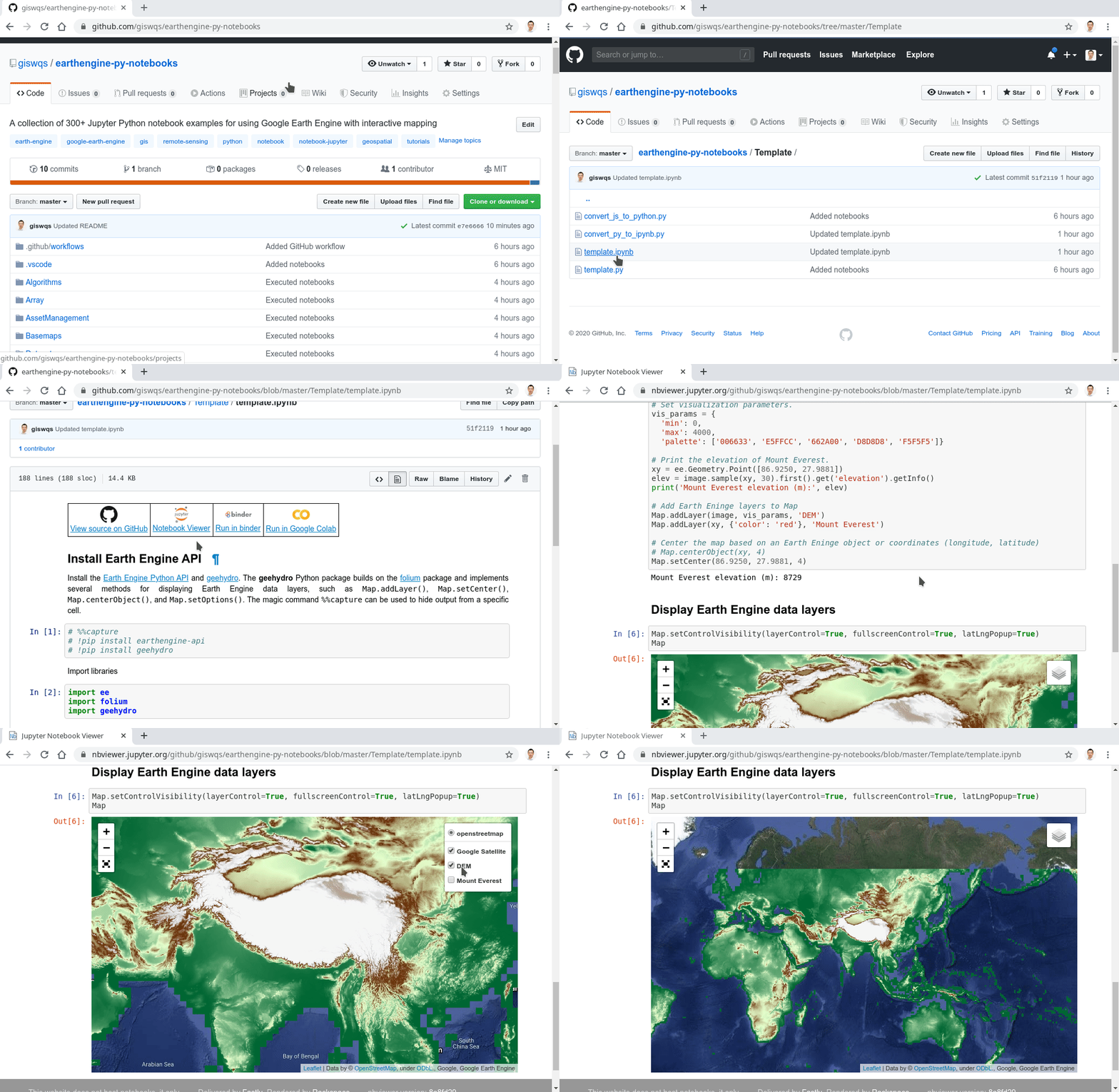
tail -f /dev/newsletter 300+ Jupyter Python notebook examples for using Google Earth Engine with interactive mapping. |
| |
| |



No comments:
Post a Comment